
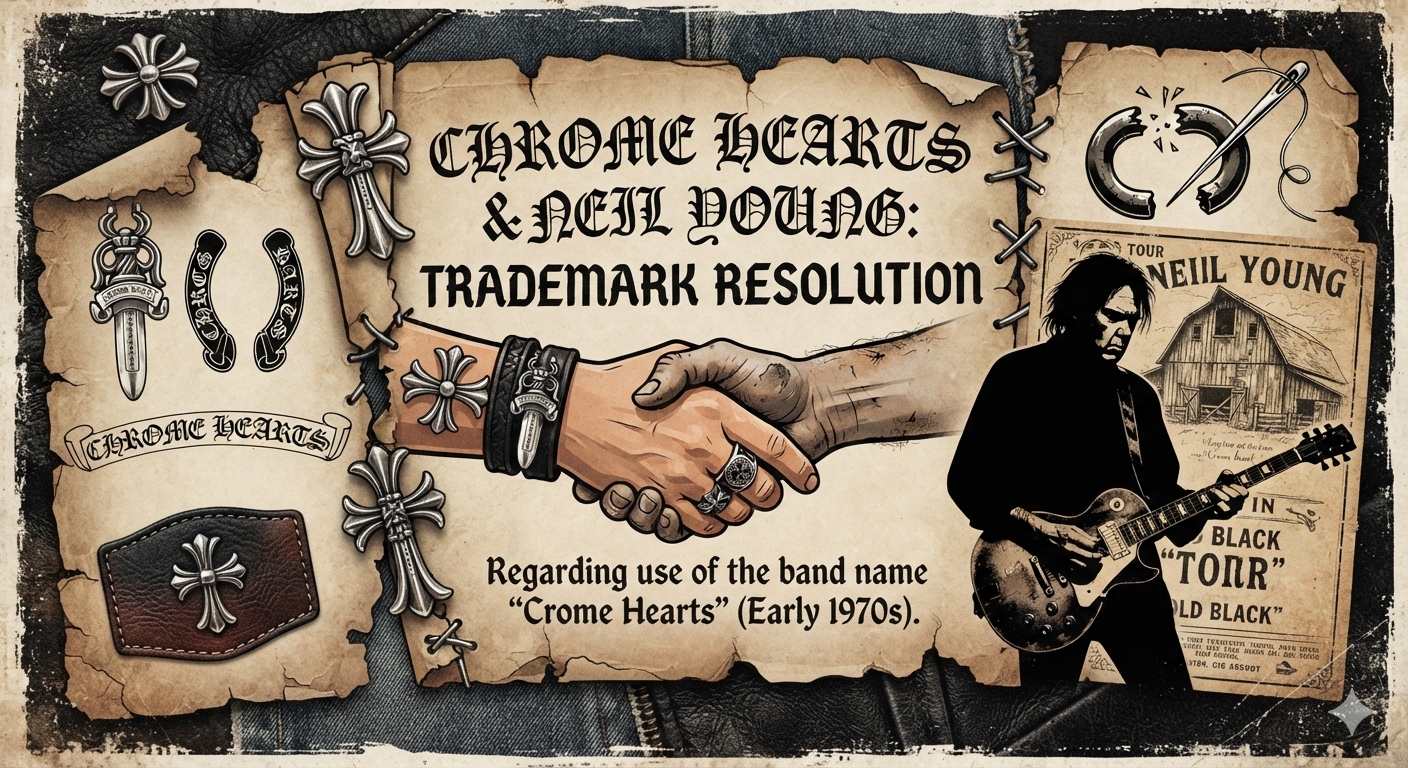
The dispute between luxury fashion label Chrome Hearts and rock musician Neil Young appeared to be heading toward a potentially complicated trademark battle. Young’s backing band had adopted the name The Chrome Hearts, the same name associated with the Los Angeles-based fashion company known for jewelry, clothing, accessories, and its distinctive gothic-inspired aesthetic.
But in May 2026, the fashion company voluntarily dismissed its lawsuit against Young and his band. The important detail is that Chrome Hearts has not publicly explained exactly why it dropped the case. There is no publicly confirmed settlement, licensing agreement, or other definitive explanation that establishes what happened behind the scenes.
So why did Chrome Hearts stop suing Neil Young? The answer is less dramatic—and less certain—than some headlines might suggest.
How the Neil Young and Chrome Hearts Dispute Began
Neil Young introduced his new backing group, The Chrome Hearts, in 2024. The lineup included guitarist Micah Nelson, bassist Corey McCormick, drummer Anthony Logerfo, and organist Spooner Oldham. Young subsequently toured and recorded with the group.
The band released its debut album, Talkin to the Trees, in June 2025. That made the name more than simply a touring designation: it became part of the band’s commercial identity, appearing alongside Young’s name and on merchandise.
That was where the fashion company’s concerns became significant.
Chrome Hearts LLC filed a federal lawsuit against Young, his bandmates, and his production company, The Other Shoe Productions Inc., on September 11, 2025, in the U.S. District Court for the Central District of California. The case was Chrome Hearts LLC v. The Other Shoe Productions, Inc. et al., Case No. 2:25-cv-08647.
The complaint included claims for federal trademark infringement, false designation of origin and false descriptions, unfair competition, and related California common-law claims.
What Did Chrome Hearts Object To?
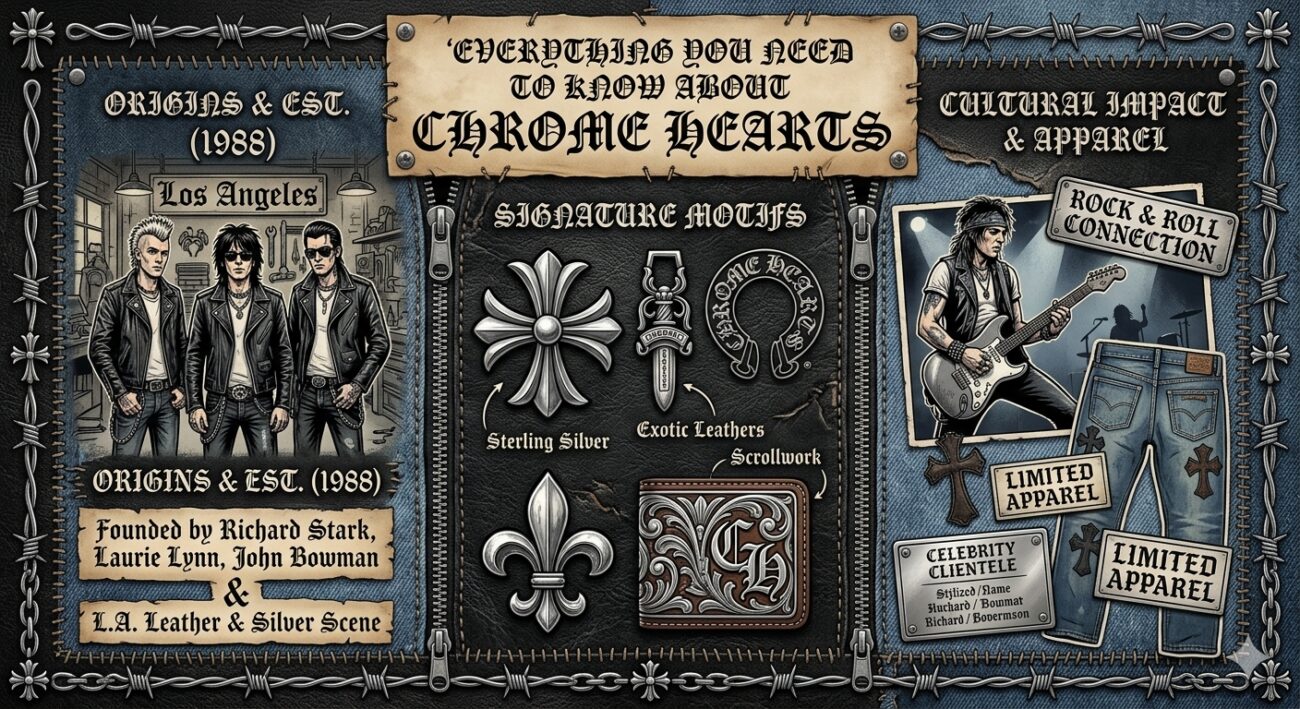
The fashion company argued that it had longstanding rights in the CHROME HEARTS name and associated trademarks. According to the complaint, its federal trademark rights dated back to 1991.
The company’s argument centered on the possibility that consumers could believe Neil Young’s band was connected to, sponsored by, or collaborating with the fashion company.
The issue was not simply that two unrelated groups happened to have similar names. Young’s band was also selling merchandise using the phrase “Neil Young and the Chrome Hearts.”
Chrome Hearts claimed that third-party clothing sellers had already created confusion by marketing products that appeared to connect Young with the fashion label. Reuters reported that the company had sent Young’s representatives a cease-and-desist letter in July 2025 before filing the lawsuit.
The company’s lawsuit sought monetary damages as well as an order preventing Young and the other defendants from continuing to use the disputed name.
Why Did Chrome Hearts Drop the Lawsuit?
This is the part where the public record becomes much less definitive.
On May 14, 2026, Chrome Hearts voluntarily dismissed the lawsuit. Bloomberg Law reported that the company filed the dismissal against Young, his bandmates, and The Other Shoe Productions. At that point, Young had not filed an answer to the original complaint.
However, neither side publicly disclosed the reason for the dismissal.
Reports following the dismissal specifically noted that it was unclear whether the parties had reached a private settlement or whether Chrome Hearts simply decided not to continue pursuing the litigation. Representatives for the parties did not provide an explanation to reporters.
That distinction matters.
A voluntary dismissal does not automatically mean that the defendant won the dispute. It also does not necessarily mean that the plaintiff admitted its claims were unsuccessful.Chrome Hearts Hoodie Without knowing the terms of any private agreement—or the company’s internal reasoning—it would be speculation to say exactly what motivated Chrome Hearts.
The Case Ended Before a Court Ruling
Another important factor is that the dispute ended without a publicly reported trial or substantive judicial ruling deciding whether Neil Young’s use of the name actually infringed Chrome Hearts’ trademarks.
The case therefore did not produce a definitive court decision answering the broader question of whether a musician can legally operate under the name “Chrome Hearts” when a fashion company already owns trademark rights to that name.
The original complaint laid out Chrome Hearts’ allegations, but allegations in a lawsuit are not the same thing as findings by a court. The federal docket identifies the case as a trademark action, while the complaint itself contains the company’s legal claims.
That makes the dismissal particularly interesting from a trademark perspective: the parties avoided a public ruling that could have provided guidance about the boundaries between music, merchandise, fashion branding, and trademark rights.
Young’s Band Kept Using the Name
Perhaps the most visible development following the dismissal is that Neil Young and the Chrome Hearts continued using the band name.
That does not necessarily reveal why Chrome Hearts dismissed the case, but it is an important factual development.
In August 2026, Pitchfork reported that Young was preparing to release Second Song, another album with the Chrome Hearts. The album was scheduled for September 18, 2026, through Reprise Records, and followed the group’s debut Talkin to the Trees.
The continued use of the name demonstrates that the lawsuit’s dismissal did not result in an obvious public rebranding of Young’s group.
Was There a Secret Settlement?
A private settlement is one possible explanation, but there is no public evidence establishing that a settlement occurred.
This is an important distinction because entertainment and trademark disputes can end through private agreements that are never fully disclosed.https://chromeheartsco.uk/ Parties may agree to licensing terms, limitations on merchandise, changes to branding, or simply decide to discontinue litigation.
But unless the parties or court documents reveal such terms, it is not possible to say that any particular arrangement occurred in the Neil Young case.
Current reporting has consistently emphasized that the circumstances surrounding the dismissal were not publicly explained.
Why the Story Matters
The Chrome Hearts–Neil Young dispute illustrates how valuable a name can become when music and fashion overlap.
For the fashion company, Chrome Hearts is an established commercial identity associated with luxury goods and decades of branding. For Young, The Chrome Hearts became the name of a working rock band and a new chapter in his long recording career.
The potential conflict became even more complicated because both identities could appear on merchandise.
Ultimately, however, the lawsuit did not produce a public courtroom resolution. Chrome Hearts filed the case in September 2025 and voluntarily dismissed it in May 2026. The company has not publicly stated why it chose to stop pursuing the litigation, and no confirmed settlement terms have been made public.
Final Thoughts
The most accurate answer to why Chrome Hearts stopped suing Neil Young is therefore: we don’t publicly know the precise reason.
What is known is that Chrome Hearts brought a trademark lawsuit alleging that Young’s band’s name and merchandise could create consumer confusion. After several months, the fashion company voluntarily dismissed the action. There was no reported trial deciding the trademark dispute, and neither side publicly disclosed whether a private settlement or another agreement was involved.
Meanwhile, Neil Young continued recording and releasing music under the Chrome Hearts name, including the 2026 album Second Song.
The case ultimately ended not with a dramatic courtroom verdict, but with an unexplained voluntary dismissal—leaving the exact reasoning behind Chrome Hearts’ decision private.